


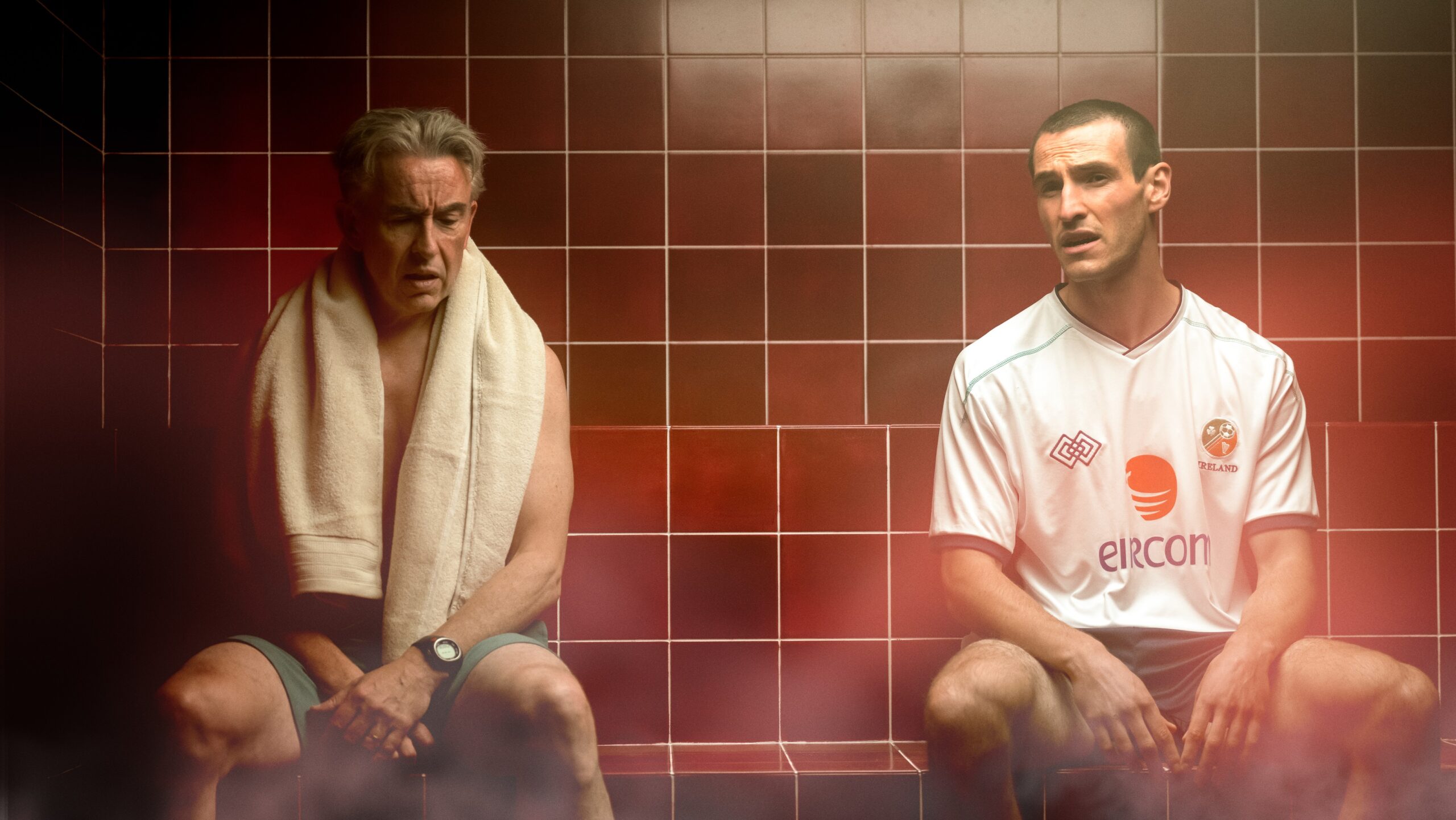
There is something deeply resonant about sports movies: more than mere games, they are stories of identity, conflict, and the human costs of ambition. At TIFF50, the sports genre is being put through a rigorous lens, not just to celebrate victories, but to ask what it means to struggle, to lead, to dissent. Among the standout films—Christy, The Smashing Machine, and especially Saipan is heartfelt, divisive, but ultimately appreciative.
Saipan: A Nation’s Question, a Player’s Reckoning
Saipan, directed by Lisa Barros D’Sa and Glenn Leyburn with a script by Paul Fraser, revisits the famous 2002 conflict between Irish captain Roy Keane and manager Mick McCarthy in the lead‑up to the FIFA World Cup. The film places us in the uncomfortable environs of the Pacific Island training camp: a rocky pitch, missing training balls, inadequate facilities—and the growing tension between a player who demands professionalism, and a coaching staff underprepared for either expectation or chaos.
Éanna Hardwicke embodies Keane with furious intensity; Steve Coogan’s McCarthy is quieter, burdened by pragmatism and expectation, perhaps the more sympathetic figure—even if not always the most resolute. The film successfully captures both the absurdity and gravity of the moment beautifully.
What Saipan Adds to the TIFF50 Conversation
-
Leadership under pressure: Saipan shows that leadership isn’t just about tactics or talent—it’s about moral clarity in the face of chaos, about how standards are upheld (or compromised).
-
Identity and belonging: Keane’s confrontation with McCarthy—and with the Irish public—is not just about management style or temper: it’s about belonging, about what it means to speak for a nation, and what people demand when gaps appear between dream and reality.
-
The cost of perfectionism: Keane’s story in Saipan, shows that striving for the ideal can be isolating—and that leaving, or dissenting, may feel necessary when the system fails you. These are human stories, of sacrifice as much as glory.
Final Word
Saipan doesn’t offer easy commutes from guilt or fault. It doesn’t simplify Roy Keane into hero or villain—nor Mick McCarthy into paragon or foil. What it does do, elegantly and powerfully, is stage a moment where sport becomes a mirror of collective expectation, of national frustration, and individual conviction. It has drawn warm applause and introspection in equal measure at #TIFF50 and marks a high point for sports cinema this year—not because it glorifies victory, but because it doesn’t flinch from conflict.
In the end, Saipan reminds us that the greatest matches are not always those decided in the final kick—but those fought before the whistle even blows.