


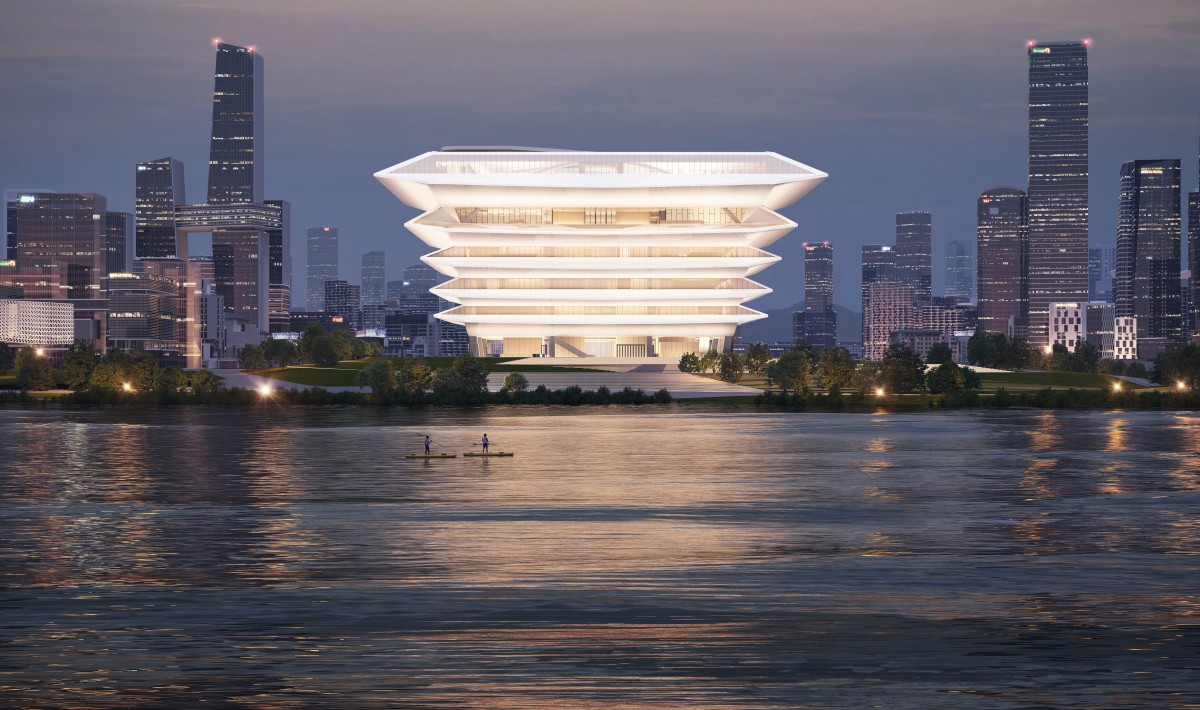
The Royal Institute of British Architects (RIBA) has today announced the 10 winning projects of the inaugural RIBA Asia Pacific Awards, honouring the most innovative, socially impactful and future-focused architecture across one of the world’s most dynamic regions. The awards were announced at a gala ceremony during the RIBA Architecture Festival Asia (RAFA) in Shenzhen, attended by leading architects, developers and policymakers from across the Asia Pacific and beyond.
The awarded projects illustrate a powerful shift in how the built environment across the Asia
Pacific is evolving to meet the demands of a rapidly changing world. Each project is deeply
rooted in local identity whilst embracing innovative design strategies, demonstrating how
architecture can respond to the urgent global challenges – from climate resilience and
environmental responsibility to rapid urbanisation and social equity, showing how thoughtful
design can enhance daily life and strengthen communities.
Across the region, architects are strengthening community life by revitalising neglected areas
and creating vibrant, socially responsive environments. In China, the ambitious transformation
of Taoxichuan Ceramic Culture Industrial Park into a thriving cultural district demonstrates
the power of adaptive reuse and establishes a new benchmark for contemporary urban public
spaces. In India, House of Memories by Studio Gravitas, in collaboration with Eleemente &
Bodh Design Group, reinterprets the traditional ‘Thotti Mane’ courtyard for contemporary and
multi-generational living in a compact and suburban plot in Karnataka.
This year’s projects demonstrate a clear commitment to sustainability, with designs that
reduce environmental impact and foreground long-term stewardship of the natural landscape.
In Bangladesh, BRAC University by WOHA transformed a former landfill site into a vibrant and
climate-conscious educational hub, setting a strong precedent for sustainable architecture and
design. In Singapore, a new 51-storey building, CapitaSpring, integrates more than 38,000
plants across sky gardens and communal spaces, creating a breathable, people-centred
environment in the heart of the business district, demonstrating how dense cities can prioritise
well-being alongside business success.
Innovation sits at the heart of the winning works, with architects embracing emerging
technologies and AI-driven design tools to advance creative boundaries. In China, Rui Xue
Multi-Hall by Tongji University combined digital design and robotic fabrication to create an
organic timber structure that supports the country’s rural revitalisation efforts, while the
Qianhai Museum in Shenzhen stands as a waterfront cultural landmark, blending art, nature,
and technology into one cohesive cultural experience.
Spanning across China, India, Singapore and Bangladesh, this year’s winners showcase the
remarkable range of design intelligence shaping local communities across the Asia Pacific.
Projects such as the West Wusutu Village Community Center in Hohhot and the Seaside
Pavilion on Chai Shan Island demonstrate how architecture can foster a strong sense of
belonging and serve as welcoming gateways for both visitors and locals alike. Varied in
ambition, scale, and approach, these works illustrate a dynamic architectural landscape that
continues to set new standards on the world stage.
Prof. Dennis Ho, RIBA Chapter Chair, Hong Kong, says, “This year’s winners exemplify the
depth and diversity of architectural excellence across the Asia Pacific. They reflect a shared
commitment to design that responds to local culture and environment, setting new
benchmarks for innovation and social purpose, and proving that thoughtful, context-driven
design can meaningfully shape a more sustainable and vibrant future for the region.”